Exploring Interoperability Challenges Between Legacy Banking Systems and Modern Digital Wallet Frameworks in International Trade Settlements
Ben Braun · Aug 22, 2026

Exploring Interoperability Challenges Between Legacy Banking Systems and Modern Digital Wallet Frameworks in International Trade Settlements
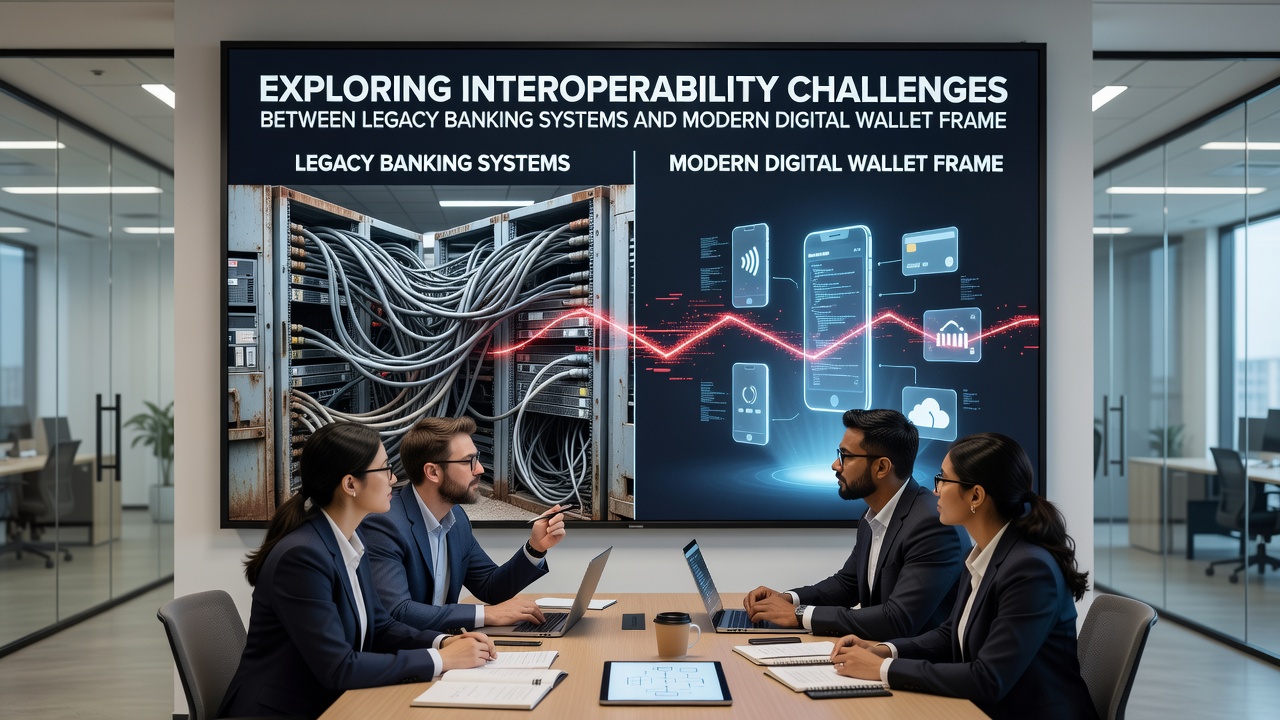
Legacy banking systems built decades ago continue to handle the bulk of international trade settlements even as digital wallet frameworks gain traction across borders, and observers note that these older platforms often rely on batch processing cycles and proprietary data formats that clash with the real-time APIs demanded by modern wallets.
Systems running on COBOL and other early languages process transactions in scheduled windows rather than continuously, whereas digital wallets such as those integrated with mobile networks or blockchain rails expect instantaneous confirmation, and this timing mismatch creates delays when trade payments move between regions with different regulatory clocks.
Core Technical Friction Points
Data exchange protocols present another layer of difficulty because legacy environments frequently transmit information through fixed-length records or EDI standards while digital wallets use JSON or XML payloads wrapped in secure token exchanges, so middleware layers must translate between the two without losing critical fields like invoice references or customs declarations that trade settlements require.
Security models also diverge sharply, with older systems depending on perimeter firewalls and encrypted tunnels established once per session, while contemporary wallets enforce device-bound cryptography and dynamic risk scoring that updates with each interaction, and integration teams must reconcile these approaches to satisfy both sides without exposing settlement data during cross-border handoffs.
Regulatory and Operational Layers
Compliance requirements add further complexity because international trade involves multiple jurisdictions that impose distinct anti-money laundering and sanctions screening rules, and legacy systems often store compliance data in siloed databases that do not sync easily with the centralized ledgers maintained by digital wallet providers, leading to repeated verification steps that extend settlement windows from hours to days.
According to figures from the Bank for International Settlements, cross-border trade volumes processed through mixed infrastructures reached significant levels by mid-2026, and reports highlight ongoing efforts to align settlement finality rules across legacy and newer platforms. In August 2026, updates from regional bodies showed continued testing of hybrid gateways that attempt to bridge these gaps in real trade corridors.
Take one logistics firm handling shipments between North American and Asian markets that discovered its legacy core could not transmit updated beneficiary details to a digital wallet used by overseas suppliers, forcing manual interventions that increased both cost and error rates until custom reconciliation scripts were deployed.
What's interesting is how currency conversion mechanisms interact with these interoperability issues, since legacy systems apply conversion rates at the end of batch cycles while digital wallets can lock rates at the moment of initiation, and any lag between the two creates discrepancies that traders must resolve through separate adjustment entries.
Case Examples from Trade Corridors
Researchers at academic institutions tracking Asian trade routes have documented instances where digital wallet settlements cleared within minutes yet waited for legacy bank confirmations that arrived only after overnight processing windows closed, and such timing differences matter when perishable goods or time-sensitive contracts depend on prompt payment proof.
Another pattern emerges in European markets where the European Central Bank has encouraged pilots that link traditional SWIFT messaging with wallet-based instant payment schemes, yet legacy participants report that mapping ISO 20022 messages to wallet token formats still requires extensive customization for each trading partner.
Those who manage vendor networks in global supply chains often discover that audit trails fracture when payments cross from a digital wallet back into a legacy core, because the latter may not retain metadata about the wallet's originating device or location stamps that newer compliance frameworks now expect.
Progress Toward Integration Standards
Industry groups have begun publishing reference architectures that define common message schemas and settlement status codes usable by both legacy and modern systems, and early adopters report reduced manual reconciliation once these schemas are implemented across trade finance platforms.
Data from the Monetary Authority of Singapore indicates that standardized APIs tested in 2026 helped shorten average settlement times for participating banks and wallet operators by measurable margins, although full rollout across all legacy installations remains gradual because core upgrades involve lengthy validation cycles.
Observers note that organizations choosing middleware solutions with strong mapping engines can route trade settlements through either path without rewriting entire transaction flows, yet the underlying challenge of maintaining consistent state across batch and real-time environments persists until more legacy cores receive incremental modernization.
Conclusion
Interoperability between legacy banking systems and digital wallet frameworks in international trade settlements continues to hinge on resolving protocol mismatches, aligning security expectations, and synchronizing compliance data flows, and progress depends on coordinated updates to both older infrastructures and newer wallet standards. As testing expands through 2026 and beyond, measurable improvements in settlement speed and accuracy appear where organizations invest in translation layers and shared data models that respect the constraints of each technology generation.