How Niche Subscription Platforms Align Credit Card Authorizations With Quarterly Tax Filings Across Multiple Jurisdictions
Petra Meier · Aug 17, 2026
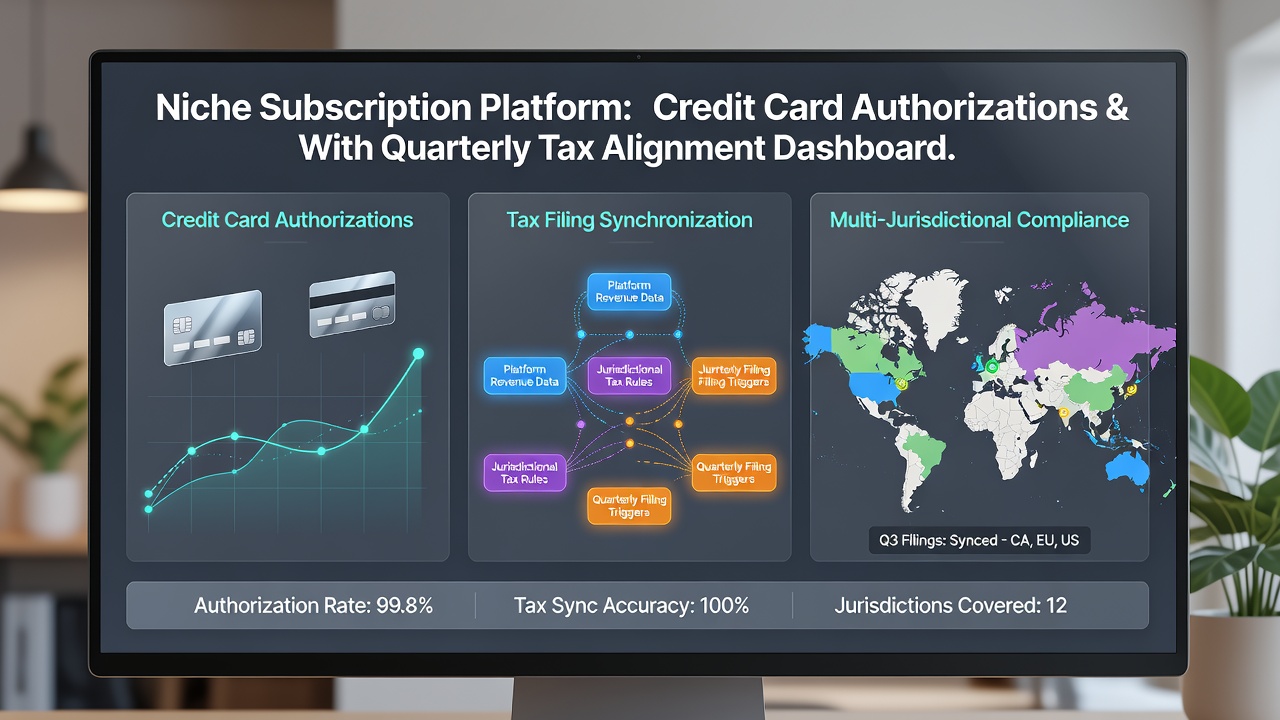
How Niche Subscription Platforms Align Credit Card Authorizations With Quarterly Tax Filings Across Multiple Jurisdictions
Subscription platforms serving specialized audiences must coordinate credit card authorization events with quarterly tax obligations that differ sharply by region, and this coordination requires precise timing between transaction captures and reporting deadlines. Platforms process recurring authorizations through gateways that record each hold, capture, and refund in detailed logs, then feed those records into tax calculation engines calibrated for U.S. sales tax, Canadian GST/HST, and EU VAT regimes simultaneously.
Authorization Timing and Reporting Cycles
Credit card networks authorize charges in milliseconds while tax authorities require aggregated data at the close of each calendar quarter, so platforms insert reconciliation routines that match authorization timestamps to the exact quarter in which revenue is recognized under local rules. In the United States, merchants often align captures with the quarter ending March, June, September, and December, whereas EU member states may recognize VAT liability on the earlier of payment or invoice date, forcing systems to flag pending authorizations that cross quarter boundaries.
Platforms therefore maintain separate ledgers for each jurisdiction, pulling authorization success rates and currency conversion values on the final day of every quarter before submitting returns. Data shows that synchronization failures typically occur when an authorization approved on 30 June posts as captured revenue on 1 July, shifting the liability into the next filing period and triggering underpayment notices from multiple authorities at once.
Multi-Jurisdiction Data Mapping
Engineers map each authorization field to tax attributes such as place of supply, customer tax status, and product category, then store the mapping in jurisdiction-specific tables that update automatically when rates change. One platform serving academic journal subscriptions routes U.S. authorizations through state-level sales tax rules while routing EU authorizations through the VAT Mini One Stop Shop portal, ensuring the same transaction record produces two compliant filings without manual intervention.
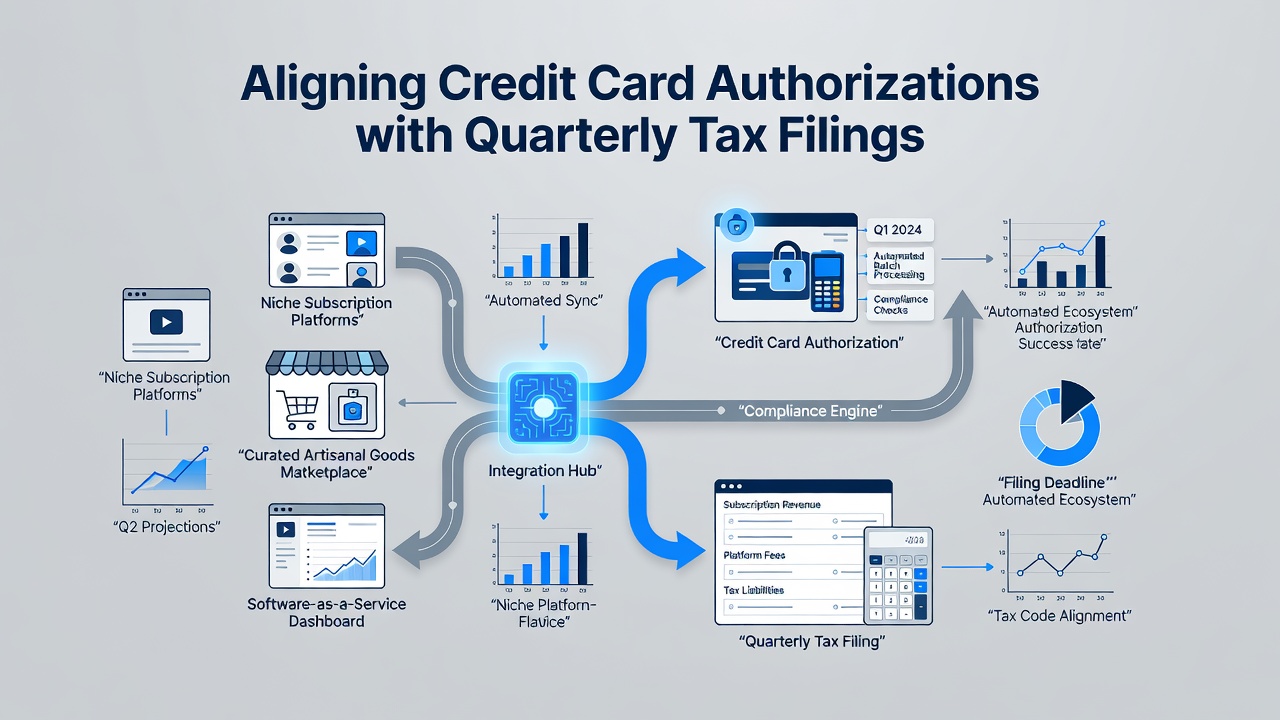
According to the Internal Revenue Service, businesses must deposit certain taxes quarterly when liability exceeds threshold amounts, and subscription platforms meet this requirement by exporting authorization totals directly into deposit schedules. In parallel, the European Commission maintains that VAT returns for distance sales must reflect the quarter in which the charge was authorized if the customer is located in the EU, prompting platforms to run parallel VAT calculations on every recurring billing batch.
Automated Reconciliation Workflows
Reconciliation engines compare gateway settlement files against tax engine outputs every 24 hours, flagging any authorization whose capture date falls outside the expected quarter for manual review by compliance teams. These routines also track partial captures and retries, because a single subscription renewal that fails on the first attempt and succeeds on the second may straddle two quarters and require split reporting. Observers note that platforms handling memberships for hobbyist communities often see authorization retry volumes spike near quarter ends, increasing the chance that a payment lands in the subsequent tax period.
By August 2026, several platforms will have completed two full years of operating under updated OECD guidelines on digital services taxation, which require real-time logging of authorization events for cross-border supplies. Those guidelines push platforms to store the exact moment an authorization request receives approval rather than the moment funds settle, tightening the alignment between technical logs and fiscal records.
Conclusion
Niche subscription platforms therefore treat credit card authorization streams as primary inputs to quarterly tax processes, using jurisdiction-specific mapping tables, daily reconciliation checks, and automated export routines to keep filings accurate across borders. The same logs that protect against chargebacks also supply the granular data regulators require, turning routine billing events into compliant tax documentation without additional manual steps.