How Nightly Reconciliation Cycles Guide Morning Purchasing Orders for Small Online Sellers
Sage Frank · Aug 22, 2026
How Nightly Reconciliation Cycles Guide Morning Purchasing Orders for Small Online Sellers
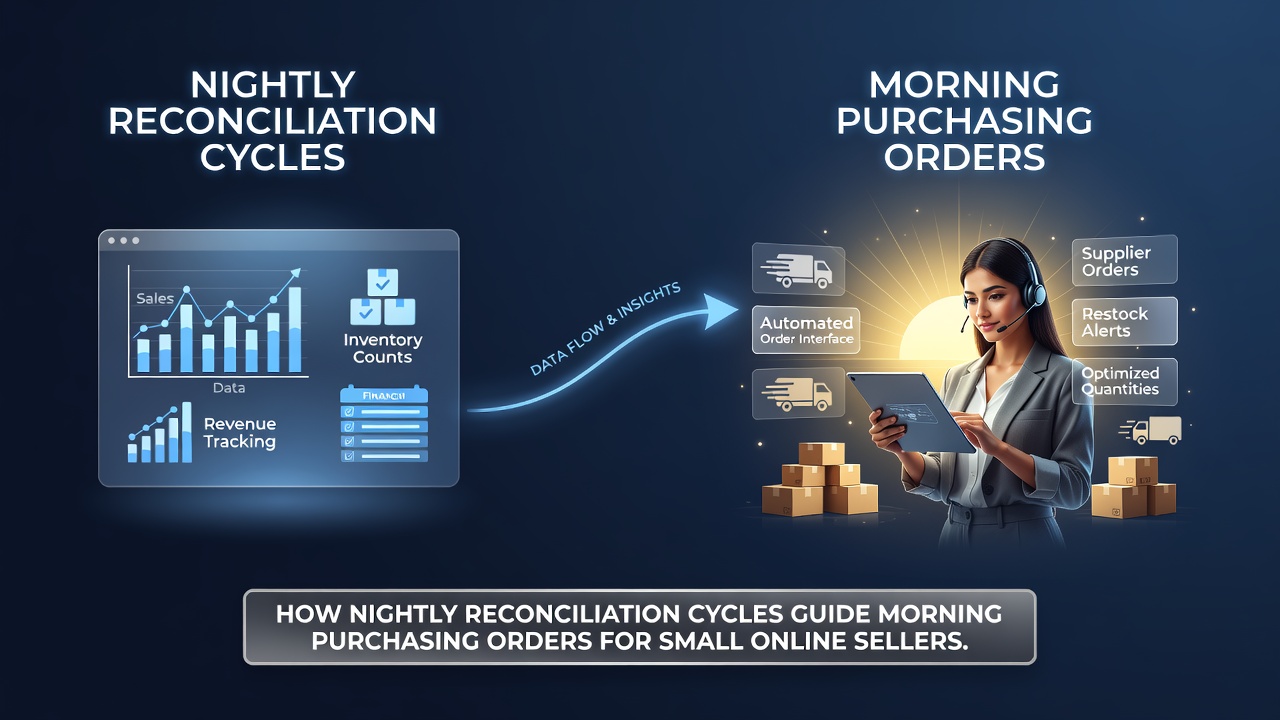
Small online sellers rely on nightly reconciliation cycles to align daily sales data with incoming payments and fees before placing fresh inventory orders the next morning, and these routines create a structured flow that prevents overcommitment on stock. Systems pull transaction logs from payment processors, match them against bank deposits, and flag discrepancies such as chargebacks or refunds so that available cash positions become clear by dawn. Observers note that sellers who skip this step often face shortages when supplier invoices arrive early, while those who review the outputs adjust quantities based on net figures rather than gross sales totals.
The Mechanics Behind Overnight Processing
Reconciliation begins after midnight when platforms batch the previous day's authorizations and settlements, then compare those records to processor reports and bank feeds that arrive in sequence. Software flags unmatched items like pending holds or currency conversion adjustments, which reduces the risk of ordering goods against funds that have not fully cleared. Data from the European Central Bank shows that automated matching cuts manual review time by up to 70 percent for merchants handling fewer than 500 transactions daily, allowing owners to focus on purchasing decisions instead of ledger corrections.
Once the cycle completes, reports summarize net cash available after deducting platform fees, shipping costs, and reserve requirements. Sellers access these summaries through dashboards that highlight projected balances for the coming day, and many integrate the output directly into inventory management tools so morning purchase lists reflect actual liquidity rather than estimates. Researchers at institutions tracking payment flows have documented that this timing aligns with supplier cutoff windows in most regions, which means orders placed before 10 a.m. often secure same-day processing and better wholesale rates.
How Available Funds Shape Purchasing Decisions
Morning purchasing orders depend on the reconciled figures because over-ordering against uncleared amounts can trigger overdraft fees or missed supplier payments. Sellers review the final balance, subtract expected returns and upcoming bills, then allocate the remainder across product categories that showed strongest velocity the prior week. Those who've studied this workflow observe that patterns emerge quickly: a seller dealing in seasonal goods might shift 30 percent of the budget toward trending items once reconciliation confirms the cash position, whereas another handling staples maintains steadier reorder quantities.
Take one retailer who noticed repeated shortfalls during peak periods until the nightly process began incorporating fee forecasts; after that adjustment, morning orders matched actual inflows more closely and reduced stockouts by nearly half. The same routine also surfaces slow-moving inventory through sales-to-purchase ratios, which guides decisions to pause reorders on underperformers and redirect funds elsewhere. By August 2026, several reconciliation platforms had added predictive alerts that flag potential shortfalls two days ahead, giving sellers extra time to negotiate payment terms with suppliers or line up short-term credit lines.
Integration With Supplier and Inventory Systems
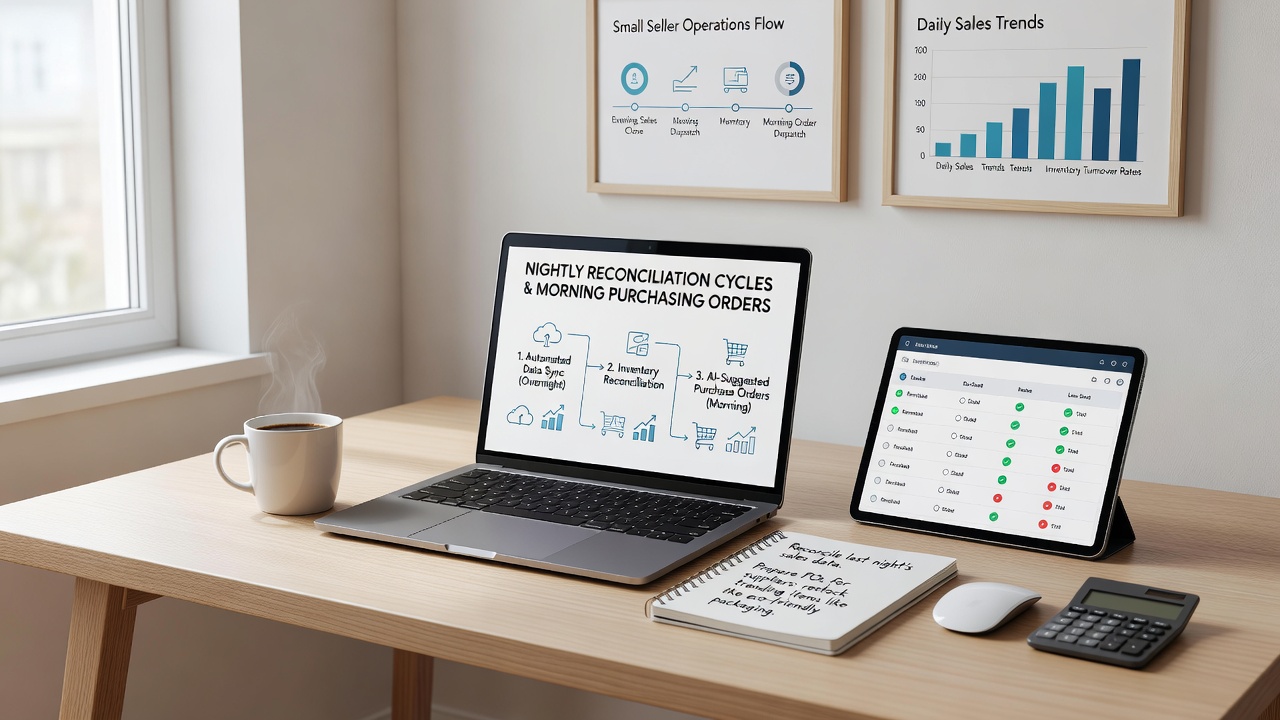
Many small sellers connect their reconciliation outputs to supplier portals and inventory software so that approved purchase lists generate automatically once the nightly cycle finishes. This linkage reduces the chance of duplicate entries and ensures quantities stay within the confirmed cash envelope. Industry reports indicate that merchants using such synchronized setups experience fewer instances of overstock because the data reflects verified deposits rather than projected sales alone. When discrepancies do appear, the system holds the affected portion of the order until the next reconciliation confirms resolution, which protects working capital during high-volume stretches.
Regional differences influence the exact timing; platforms serving North American sellers often complete reconciliation by 4 a.m. local time, whereas those handling cross-border volumes may extend the window to accommodate multiple time zones and currency settlements. Sellers operating in multiple marketplaces track each channel's reconciliation separately because fee structures and payout schedules vary, yet the consolidated morning view still provides a single purchasing roadmap. According to data released by the Reserve Bank of Australia, businesses that maintain separate ledgers for each sales channel reduce reconciliation errors by roughly 25 percent compared with those relying on combined reports.
Common Challenges and Adjustments
Delays in bank feeds or processor reports occasionally push reconciliation past the usual cutoff, forcing sellers to base early orders on conservative estimates until full figures arrive. In those cases, many adopt a staged purchasing approach that releases partial orders first, then supplements them once the complete report lands. Observers have recorded that this method preserves supplier relationships while limiting exposure to unconfirmed funds. Automated alerts notify owners of pending items so they can decide whether to wait or proceed with reduced quantities.
Conclusion
Nightly reconciliation cycles supply the verified cash positions that small online sellers use to calibrate morning purchasing orders, and the process ties together transaction matching, fee accounting, and inventory planning into one continuous workflow. Sellers who maintain consistent review habits see steadier stock levels and fewer liquidity surprises because each day's orders rest on documented balances rather than estimates. As payment platforms continue to refine matching accuracy and timing, the link between overnight processing and daytime purchasing decisions remains central to operational stability for merchants managing limited resources across competitive marketplaces.