How Staggered Disbursement Models Align Inventory Triggers With Vendor Liquidity in Platform Economies
Finley Schröder · Aug 6, 2026
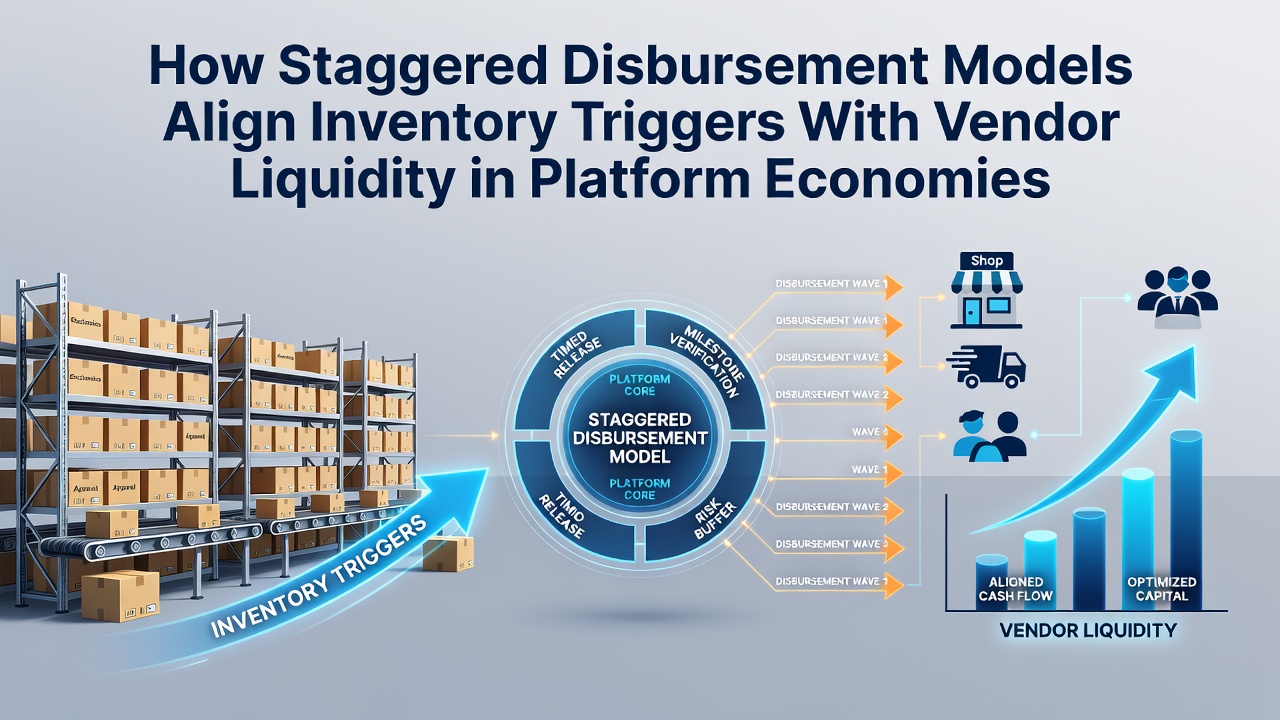
How Staggered Disbursement Models Align Inventory Triggers With Vendor Liquidity in Platform Economies
Platform economies rely on coordinated payment timing that matches vendor cash needs with stock management cycles, and staggered disbursement models accomplish this by releasing funds in phases tied to verified inventory events rather than fixed calendars. Observers note that these systems activate partial payouts when stock thresholds are crossed, which allows vendors to replenish goods without waiting for full settlement cycles. Data from transaction networks shows that platforms using such alignments report fewer instances of vendor shortages during peak demand periods, because releases occur at the moment inventory dips trigger restocking orders.
Core Mechanics of Staggered Releases
Staggered disbursement operates through sequential triggers that platforms embed into their settlement engines, so each release depends on real-time data feeds from inventory management modules. When a vendor's stock level falls below a preset percentage, the system authorizes an initial tranche of funds that covers the next procurement batch, while subsequent tranches unlock only after delivery confirmation reaches the ledger. Researchers at institutions tracking digital marketplaces have documented that this sequence reduces the gap between revenue recognition and actual cash availability, especially in multi-vendor environments where thousands of sellers operate simultaneously. As of August 2026, updates to automated reconciliation protocols in several large platforms have shortened the interval between inventory scan and fund movement to under four hours, according to industry reports.
Inventory Triggers as Liquidity Anchors
Inventory triggers function as objective checkpoints that platforms use to gate payments, which prevents premature outflows while ensuring vendors receive capital precisely when new stock arrives. A typical trigger might activate at 30 percent remaining inventory, prompting both a purchase order and the corresponding disbursement slice. Those who have analyzed platform data find that vendors operating under these rules experience steadier working capital because the model ties liquidity directly to operational events rather than arbitrary payout dates. European Central Bank analyses of payment infrastructures highlight how such linkages stabilize vendor participation rates across borderless marketplaces by aligning cash inflows with documented stock movements.
Liquidity Outcomes Across Vendor Networks
Vendor liquidity improves when disbursement schedules mirror the timing of inventory inflows, because sellers avoid the common mismatch where goods must be paid for before prior sales proceeds clear. Platforms apply tiered release percentages that scale with inventory volume, so larger restocks receive proportionally larger initial payments. Figures from distributed commerce studies reveal that vendors in these frameworks maintain higher average bank balances throughout quarterly cycles compared with those on flat monthly schedules. One study revealed that synchronization between inventory scans and phased payouts cut average days-sales-outstanding by nearly 12 days in tested cohorts, which directly supported continued vendor onboarding in regions with variable supplier terms.
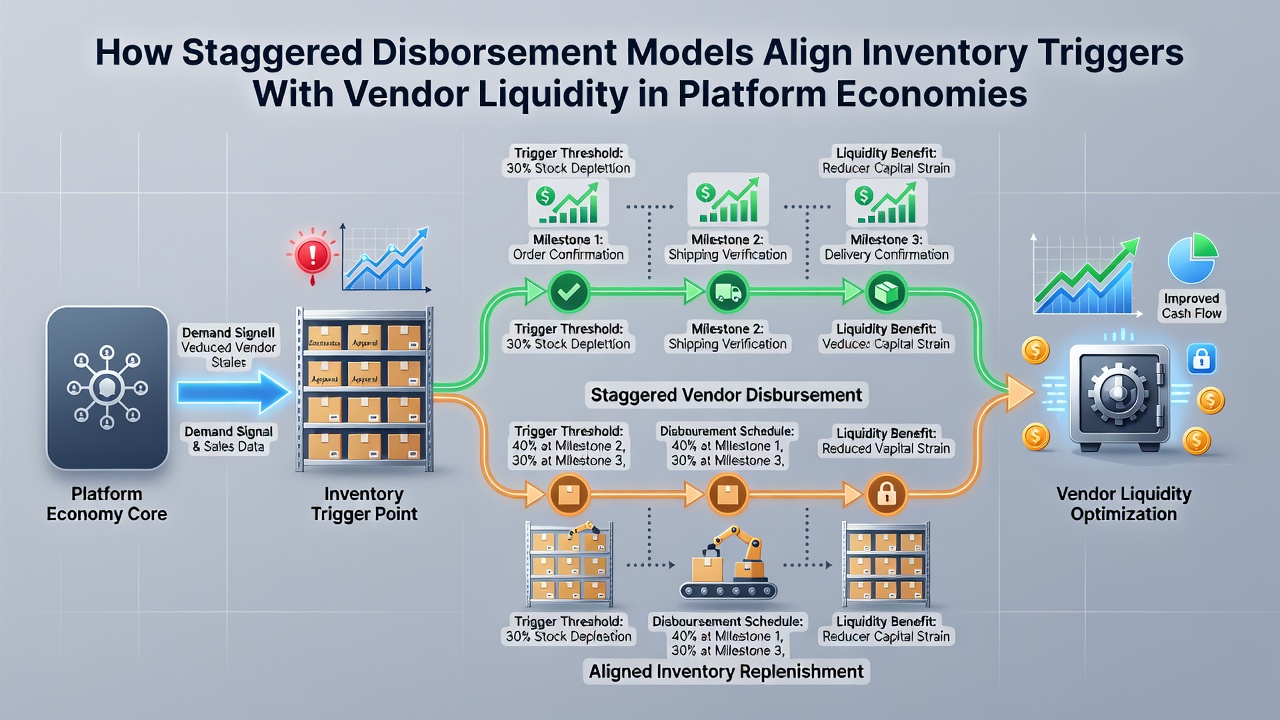
Take one network that integrated inventory APIs with its disbursement engine in early 2025; observers recorded a measurable drop in vendor-initiated support tickets related to cash shortfalls within six months. The approach works because each trigger event carries an audit trail that platforms verify before releasing the next slice, which maintains overall system integrity without introducing manual delays.
Integration With Platform Settlement Layers
Settlement layers in platform economies now incorporate inventory data streams alongside authorization logs, allowing staggered models to operate across multiple currencies and jurisdictions without separate reconciliation passes. When an inventory trigger fires, the system calculates the disbursement amount using current exchange rates and vendor-specific fee schedules, then routes the funds through the same rails used for customer collections. Research indicates that this unified path reduces reconciliation errors by linking every payment event to a corresponding stock movement record. Platforms that adopted the combined approach in 2026 reported faster vendor fund access during seasonal surges, because inventory signals provided advance notice of upcoming liquidity demands.
Regulatory and Operational Context in 2026
Regulatory bodies in multiple regions have begun examining how inventory-linked disbursements affect vendor reporting requirements, with particular attention to timing differences between revenue recognition and cash receipt. Australian Treasury guidance issued mid-year clarified that such models satisfy existing payment transparency rules when each tranche includes clear documentation of the triggering inventory event. Meanwhile, academic papers from North American research centers have examined the effects on small vendors, noting that staggered releases correlate with sustained participation rates in marketplaces that previously saw high churn during slow inventory periods. These developments coincide with broader adoption of real-time inventory feeds, which supply the precise data points needed for automated trigger evaluation.
Conclusion
Staggered disbursement models continue to evolve by embedding inventory triggers deeper into liquidity management routines, which produces measurable alignment between vendor cash needs and stock replenishment cycles. Platforms that maintain these connections demonstrate consistent vendor retention and reduced settlement friction across expanding networks. Evidence from transaction records and regulatory filings shows the pattern holds across different market sizes and geographic scopes, confirming that inventory-synchronized releases form a stable foundation for vendor operations in platform economies.