PCI Compliance Timelines and Approval Speeds for Mobile-First Freelancers
Petra Meier · Aug 15, 2026
PCI Compliance Timelines and Approval Speeds for Mobile-First Freelancers
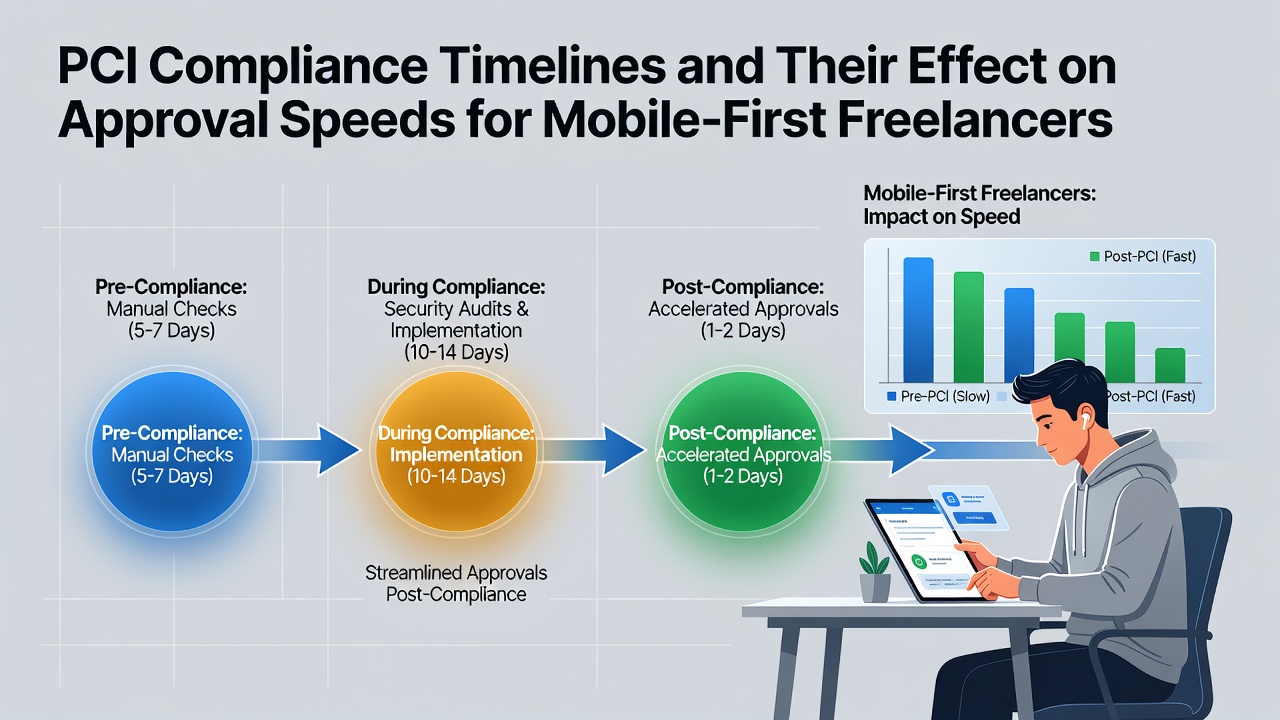
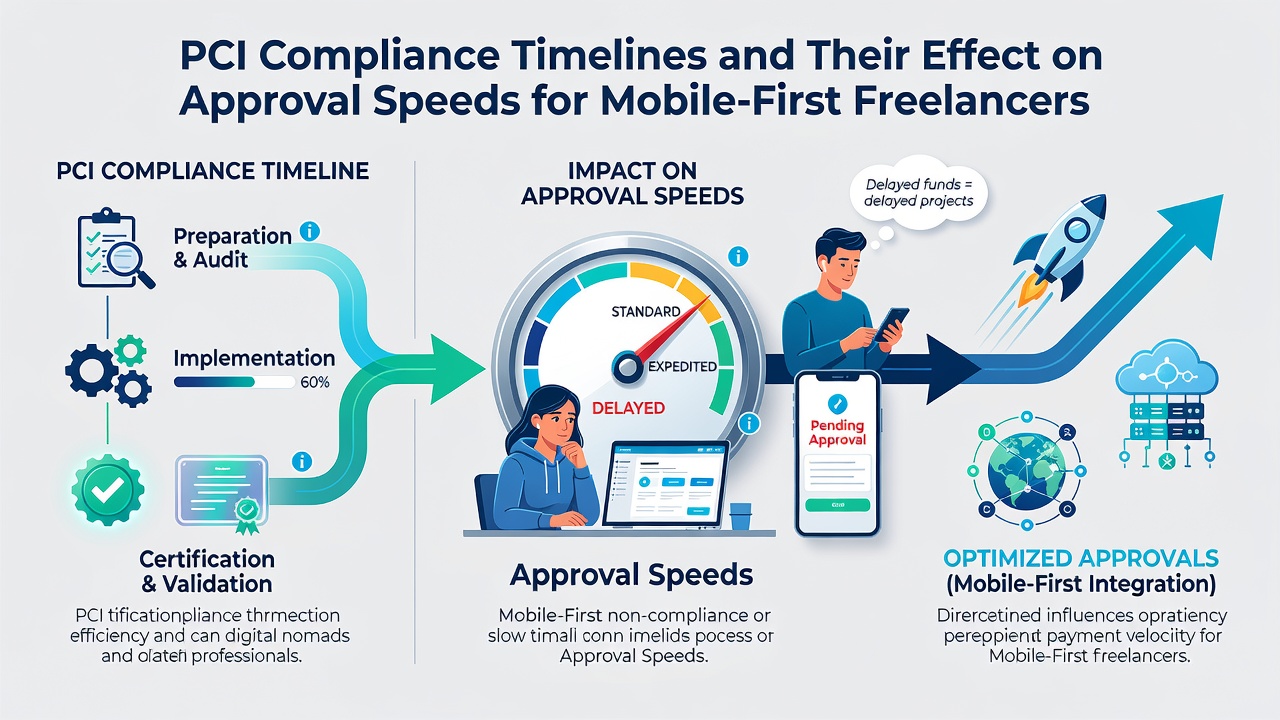
Payment card industry data security standards require structured validation steps that directly shape how quickly mobile-first freelancers receive merchant account approvals, and these timelines vary by assessment type along with the scope of data handling in each operation.
Core Requirements and Validation Pathways
PCI DSS outlines multiple self-assessment questionnaires that match different transaction volumes and integration methods, so freelancers using mobile invoicing apps often fall under SAQ A or SAQ A-EP when they redirect payments through hosted fields or tokenization services, whereas full card data capture on devices pushes them toward SAQ D with its extended documentation demands. Research from the PCI Security Standards Council shows that SAQ A typically completes in two to four weeks when supporting evidence is prepared in advance, yet SAQ D submissions frequently extend to six or eight weeks because of required network diagrams, policy reviews, and quarterly vulnerability scans.
Observed Effects on Mobile Freelancer Approvals
Approval speed for payment processing accounts slows when compliance documentation lags behind application submission, and data from payment processors indicate that mobile-first operators experience an average delay of 18 days when switching from basic SAQ A to more rigorous levels after initial account setup. Those who studied this pattern note that freelancers handling international clients often encounter extra review cycles because cross-border data flows trigger additional validation questions under regional interpretations of the standard. One case involved a graphic designer in Canada who submitted an SAQ A-EP package in early 2025 and received approval within 22 days, while a similar profile in Australia using device-based card entry waited 47 days for SAQ D clearance.
August 2026 Developments in Validation Processes
As of August 2026, several acquirers updated their intake portals to accept automated scan reports directly from approved vendors, which shortened review windows for mobile operators by an average of nine days according to aggregated processor statistics. This change aligned with PCI DSS version refinements that emphasize continuous monitoring over one-time assessments, and figures from the Australian Payments Network reveal that 63 percent of new freelance accounts cleared faster when they included pre-linked ASV scan results at submission. Yet operators still report bottlenecks when mobile apps require custom integrations that fall outside standard SAQ templates, prompting manual security assessments that add two to three weeks.
Regional Variations in Processing Times
European acquirers tied to the European Payments Council tend to enforce stricter policy documentation for SAQ D submissions compared with North American counterparts, leading to longer average approval intervals of five to seven weeks for freelancers who store any cardholder data locally on devices. In contrast, processors operating under frameworks aligned with the Monetary Authority of Singapore have introduced expedited tracks for tokenization-heavy setups, reducing timelines to three weeks for qualifying mobile-first applicants. Observers note that these differences create uneven competitive conditions for global freelancers who must select processors based on both fee structures and compliance speed rather than features alone.
Practical Patterns in Documentation Preparation
Freelancers who maintain updated asset inventories and policy templates before applying complete their assessments more rapidly, and industry reports show that pre-prepared SAQ packages cut overall approval time by 25 percent across sampled mobile operators. When apps rely entirely on third-party gateways for card capture, the reduced scope allows quicker SAQ A completion, whereas any direct entry of card details on phones or tablets expands the compliance boundary and extends validation to include device security testing. Those who've examined approval logs find that incomplete network diagrams remain the most common reason for resubmission requests, adding an average of 12 days per iteration.
Conclusion
PCI compliance timelines continue to determine merchant account approval speeds for mobile-first freelancers through the specific questionnaire level required, the extent of data handling chosen, and the efficiency of documentation submission, with recent portal enhancements and regional processing differences shaping outcomes as observed through August 2026. Data from multiple payment networks confirm that preparation and integration choices produce measurable differences in clearance intervals across geographic markets.