Split Payment Timing Layers in Collaborative Project Platforms: Aligning Multi-Party Authorizations With Project Milestone Triggers
Ben Braun · Sep 3, 2026
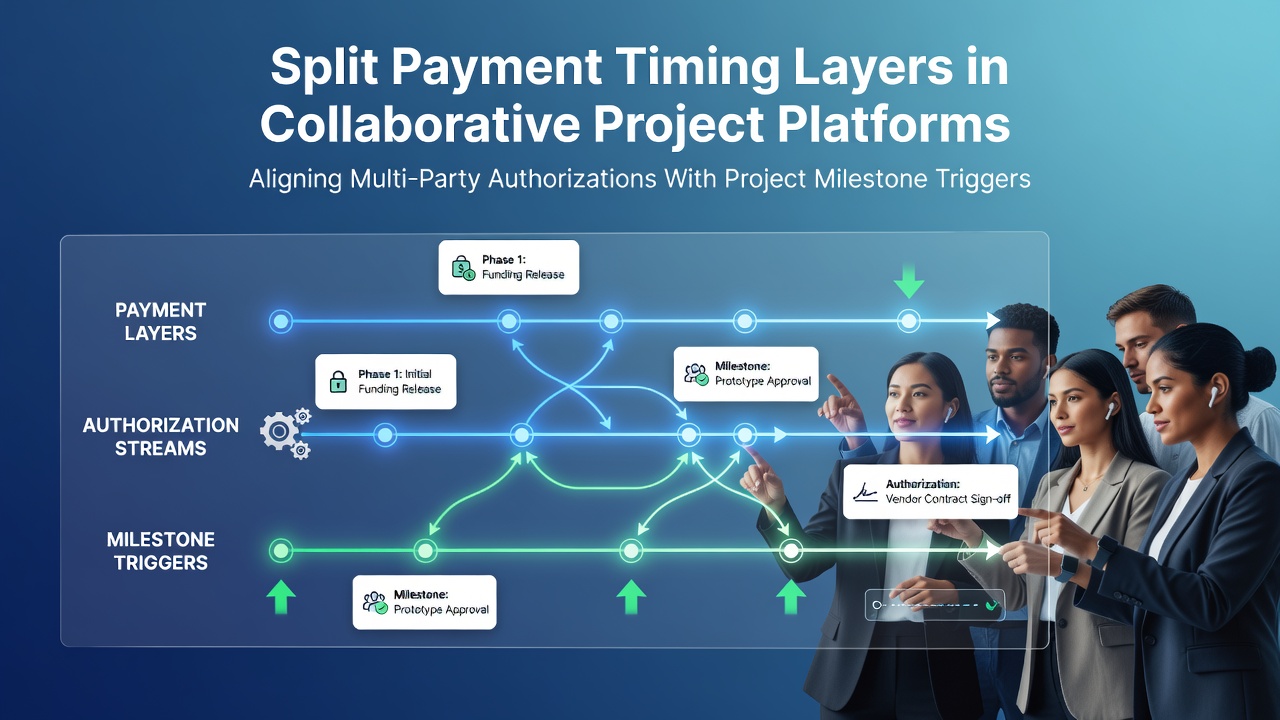
Split Payment Timing Layers in Collaborative Project Platforms: Aligning Multi-Party Authorizations With Project Milestone Triggers
Collaborative project platforms have incorporated split payment timing layers that distribute funds across multiple stakeholders based on verified milestone completions rather than fixed schedules. These systems coordinate authorizations from all involved parties before releasing portions of the total budget, which reduces disputes in fields such as software development, construction, and research initiatives where several contractors contribute simultaneously.
Data from payment infrastructure analyses show that platforms using these layers process transactions in stages tied directly to deliverables, and this approach aligns cash flow with actual progress. Observers note that synchronization occurs through predefined triggers embedded in project management software, so each authorization request activates only after prior stages receive confirmation from designated approvers.
How Multi-Party Authorization Protocols Function
Multi-party authorization protocols require consensus among participants before any split payment executes, and this setup typically involves digital signatures or blockchain-based ledgers that record approvals in sequence. Researchers at institutions tracking financial technology have documented cases where three or more parties must validate a milestone before funds move, which prevents premature disbursements in joint ventures.
Platforms integrate these protocols with API connections to banking networks, allowing real-time status checks that update all stakeholders simultaneously. According to reports from the Bank for International Settlements, such layered systems have appeared in cross-border collaborations since the early 2020s, where currency conversions add another verification step at each trigger point.
Milestone Triggers and Their Role in Timing Layers
Milestone triggers define the exact conditions under which payment layers activate, ranging from completed code reviews in tech projects to structural inspections in engineering contracts. These triggers link directly to documentation uploads or third-party audits within the platform, creating an automated chain that releases funds only when evidence meets preset criteria.
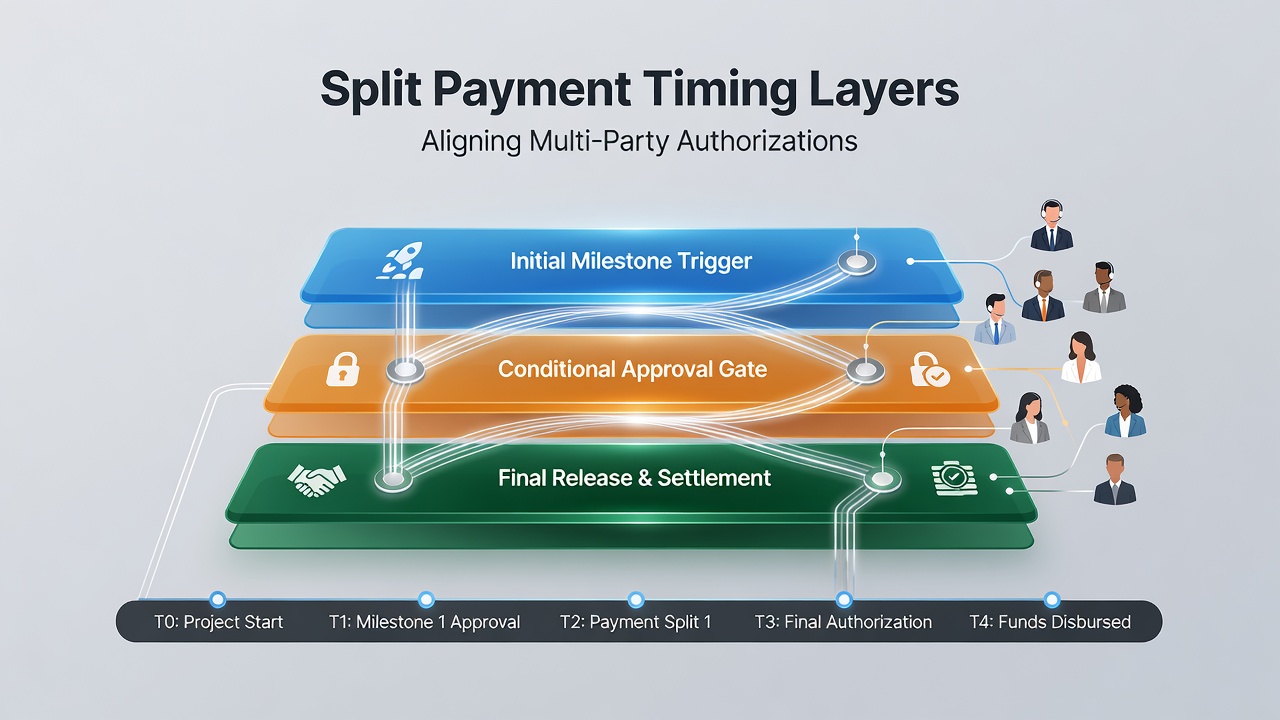
Figures from industry tracking services reveal that platforms employing milestone-aligned timing reduce average settlement delays by coordinating batch releases with individual authorizations. In practice, one contractor might receive an initial 30 percent upon design approval while others await later stages, and the system maintains a running ledger that all parties can audit without manual reconciliation.
Implementation Patterns Across Sectors
Construction consortia have adopted split payment timing layers to manage subcontractor payments tied to phased inspections, whereas software teams use them for sprint-based releases that require client sign-off alongside internal reviews. Data compiled by the Reserve Bank of Australia indicates growth in these configurations among distributed teams handling projects valued above standard thresholds, particularly where regulatory compliance demands documented approval trails.
September 2026 marks the scheduled rollout of updated interoperability standards from several central banks, which will require platforms to include timestamped authorization logs for every split transaction. Those standards aim to standardize how triggers communicate with external payment rails, reducing mismatches that currently occur during international collaborations.
Technical Components Supporting the Layers
Technical components include escrow holding mechanisms that segment total project funds into virtual sub-accounts, each linked to a specific milestone. Smart contract elements enforce the timing rules by monitoring trigger events and executing transfers only after all required signatures accumulate, and this architecture appears in platforms that connect directly to enterprise resource planning tools.
Security protocols add encryption layers around authorization messages, ensuring that no single party can alter trigger conditions unilaterally. Studies from academic sources on distributed ledger applications have tracked error rates dropping when these systems replace traditional sequential invoicing, because simultaneous visibility prevents the accumulation of unverified claims.
Challenges in Scaling These Systems
Scaling split payment timing layers across larger networks introduces coordination overhead when participant numbers exceed typical thresholds, since each additional authorizer extends the window before funds release. Platform operators address this by offering tiered approval workflows that assign different weights to stakeholders based on contract size or expertise area.
Integration with legacy banking systems remains a point of friction in regions where real-time settlement rails are still expanding, yet providers continue to build adapters that translate platform triggers into standard payment instructions. Evidence from transaction monitoring services shows that hybrid approaches combining timing layers with traditional invoicing handle most edge cases during transition periods.
Conclusion
Split payment timing layers continue to evolve as collaborative platforms refine how they connect multi-party authorizations to milestone events. The mechanisms provide structured pathways for fund distribution that match project progress, and ongoing regulatory developments scheduled for September 2026 will likely standardize further elements of these processes across borders.