Tracing Encryption Handoffs Between Risk Engines and Payout Queues in Collaborative Digital Storefronts
Finley Schröder · Aug 24, 2026
Tracing Encryption Handoffs Between Risk Engines and Payout Queues in Collaborative Digital Storefronts
Collaborative digital storefronts rely on intricate sequences where risk engines evaluate transaction threats before handing encrypted data to payout queues, and this process has grown more layered as multi-vendor platforms expanded operations through 2026. Researchers tracking these flows note that encryption protocols must maintain integrity across each transfer point, since any break in the chain could expose sensitive merchant or customer details during the shift from fraud detection to settlement execution.
Core Components of the Handoff Process
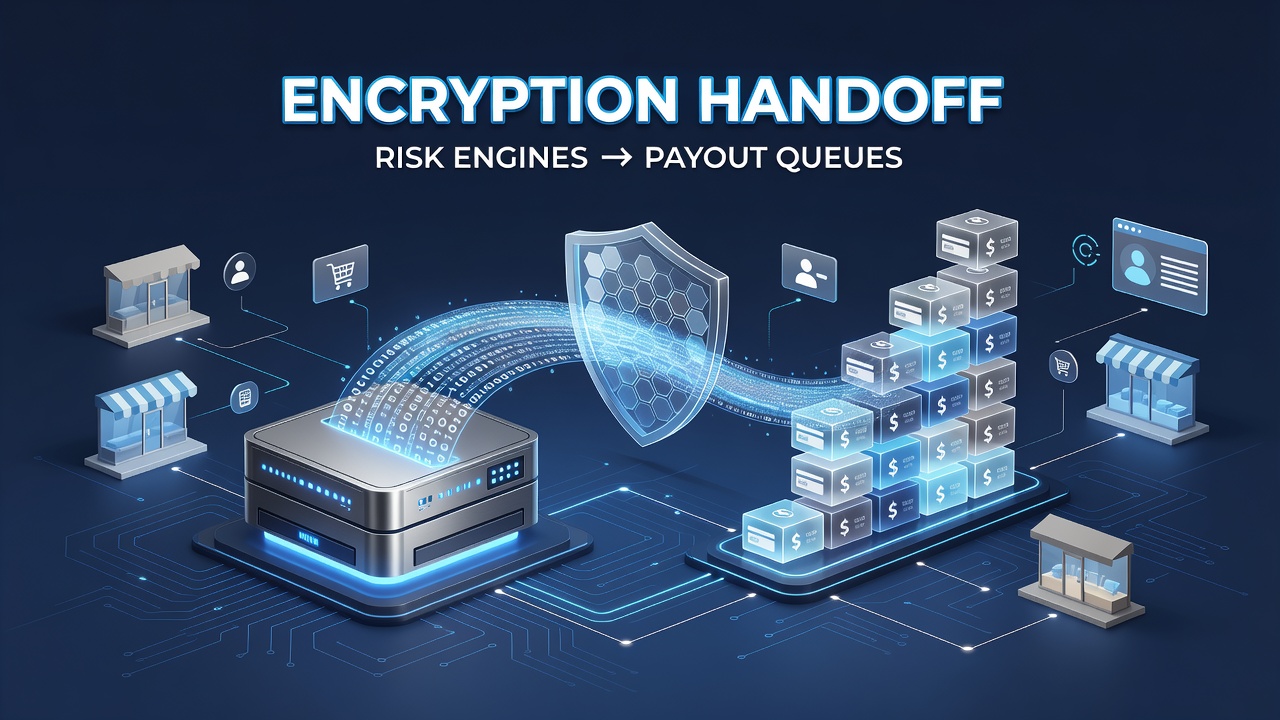
Risk engines first process incoming payment requests through layered encryption standards that include token wrapping and key rotation schedules, then they forward validated payloads to payout queues using secure session tokens that expire after a single use. Observers tracking platform architectures report that these handoffs often occur within milliseconds, with data formats converting from risk-scoring JSON structures into queue-ready encrypted blocks that comply with regional data residency rules. In August 2026 several large marketplaces updated their internal routing to incorporate quantum-resistant algorithms during this exact transfer stage, reducing the window for interception while preserving authorization speeds.
Those who manage collaborative storefront infrastructure describe the encryption handoff as a relay where the risk engine strips certain metadata tags before passing the core payload onward, which prevents payout systems from accessing unnecessary customer identifiers. This selective stripping occurs through API endpoints that enforce mutual TLS certificates, and studies from payment network operators show the method cuts exposure risks by limiting data visibility at each downstream stage.
Security Protocols Governing Transfers
Encryption handoffs follow strict key management hierarchies where session keys generated by the risk engine are re-encrypted under the payout queue's public certificate before transmission begins. Data from industry monitoring groups indicates that platforms handling cross-border vendor networks now require at least two distinct encryption layers during this movement, with one layer tied to fraud scoring and the second aligned to settlement compliance. When these layers align correctly the payout queue can decrypt only the minimum fields needed for disbursement, leaving higher-level risk flags inaccessible after the handoff completes.

Take one European platform operator that implemented segmented key vaults in early 2026, and the change allowed risk engines to sign handoff packets without exposing the underlying payout encryption keys to the same administrative team. Similar approaches appear in reports from the European Central Bank on payment security practices, where auditors noted reduced breach surfaces when encryption responsibilities stay partitioned between assessment and disbursement teams. Meanwhile North American operators have leaned on NIST guidelines for post-quantum key exchange during the same sequence, producing measurable drops in failed handoff attempts according to internal telemetry shared at trade conferences.
Operational Challenges in Multi-Vendor Environments
Collaborative storefronts that aggregate vendors from multiple regions face added complexity because encryption standards must reconcile differing regulatory expectations before any handoff occurs. Payout queues often sit behind jurisdiction-specific firewalls, so the risk engine must embed compliance metadata inside the encrypted packet without lengthening processing times beyond acceptable thresholds. Figures released by the Reserve Bank of Australia in mid-2026 highlighted that platforms using unified encryption schemas across borders recorded fewer settlement disputes than those relying on piecemeal protocol translations.
Yet the reality is that legacy queue systems sometimes reject packets carrying newer encryption markers, forcing developers to maintain fallback decryption paths that still meet audit requirements. Observers following these adaptations point out that successful handoffs depend on synchronized clocking between risk engines and payout systems, since timestamp mismatches can trigger automatic rejection even when the encryption itself remains valid.
Conclusion
Encryption handoffs between risk engines and payout queues form a critical junction in collaborative digital storefront operations, and continued refinement of these sequences supports both fraud resistance and timely vendor disbursements. Platforms that maintain clear separation of encryption responsibilities while aligning with evolving standards demonstrate measurable improvements in data protection across distributed vendor networks. As August 2026 closed, documentation from multiple operators showed that consistent monitoring of these transfer points remains essential for sustaining secure settlement flows in expanding marketplace environments.