Tracing Fiscal Reporting Threads Through International Dropshipping Payment Streams
Finley Schröder · Sep 17, 2026
Tracing Fiscal Reporting Threads Through International Dropshipping Payment Streams
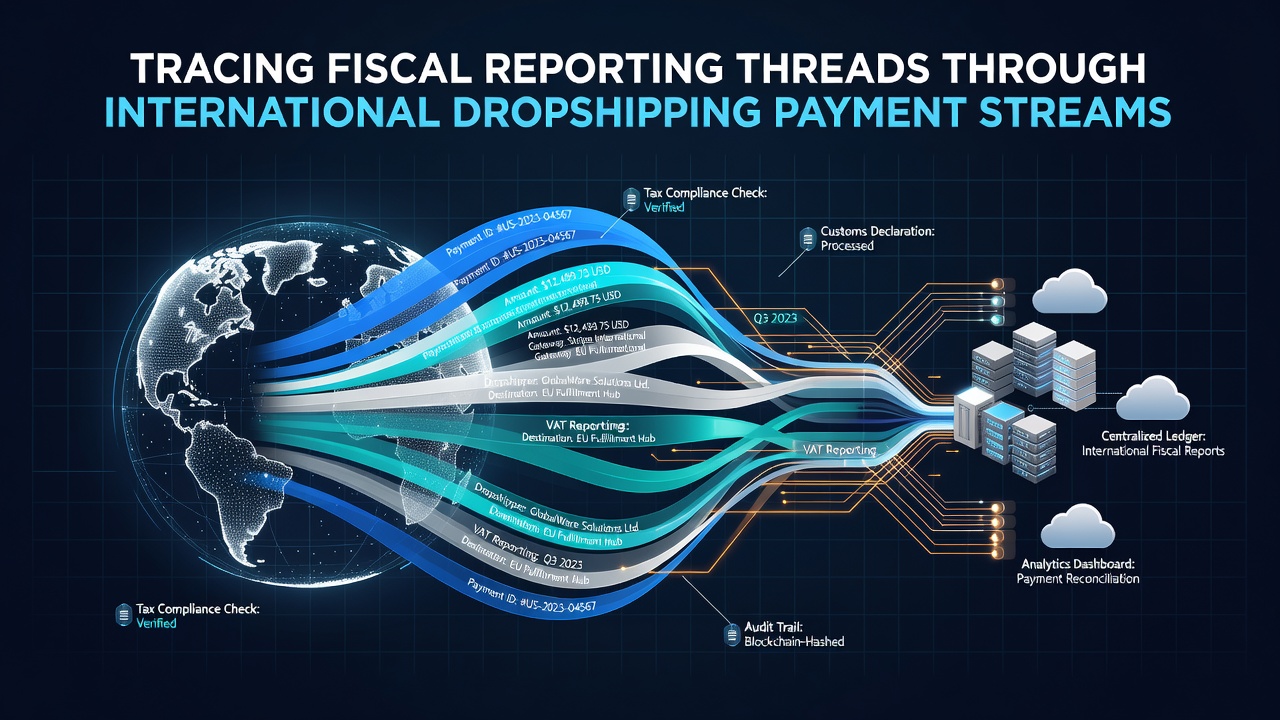
International dropshipping creates layered payment streams where customer funds move across borders before reaching suppliers, and each transfer leaves fiscal reporting requirements that tax authorities track through multiple jurisdictions. Payment processors record transaction details including amounts, currencies, and merchant identifiers, then forward aggregated data to banks and regulatory bodies under frameworks such as the Common Reporting Standard and country-specific value-added tax rules.
Payment Flow Architecture in Cross-Border Dropshipping
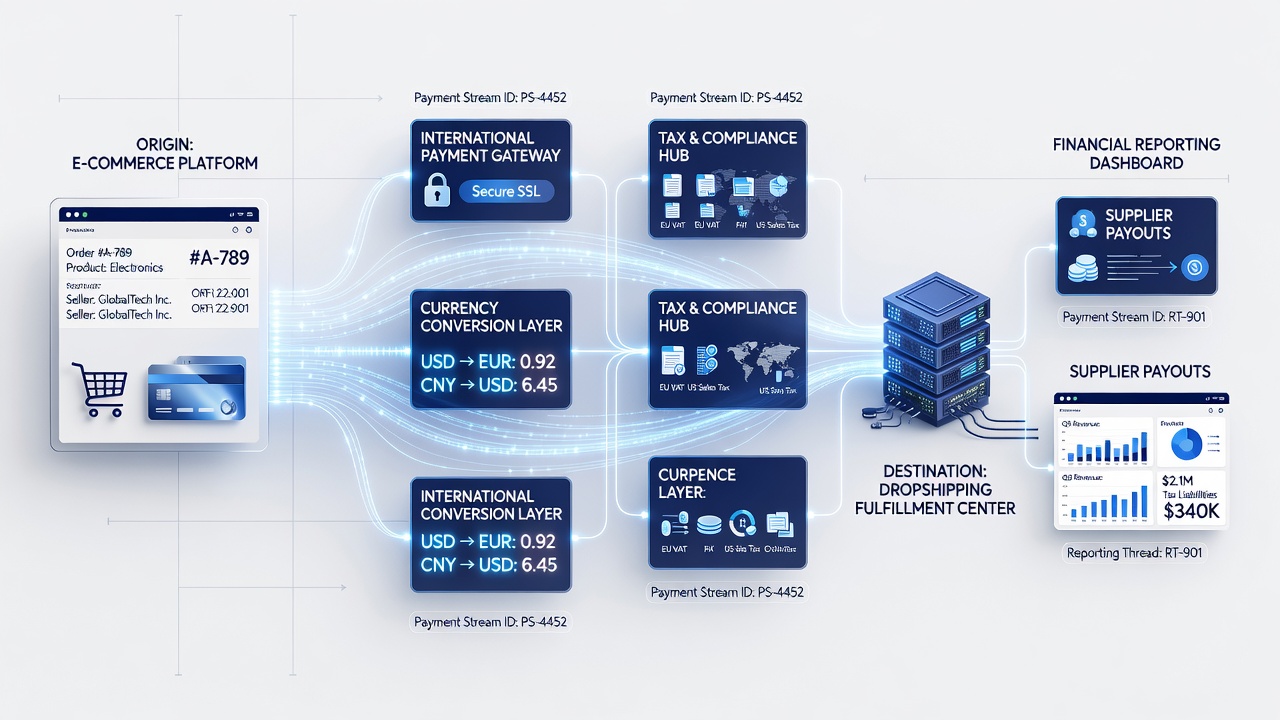
Customer purchases initiate at online storefronts, after which platforms route funds through acquiring banks to merchant accounts held by dropshippers or marketplace operators. Suppliers located in separate countries receive payments only after platform deductions and currency conversions occur, creating sequential records that span several financial institutions. Each intermediary generates settlement reports that tax agencies later reconcile against income declarations submitted by sellers and vendors.
Observers note that dropshippers operating across multiple marketplaces often maintain separate entity structures in different regions to manage local compliance obligations. These structures produce parallel reporting threads because platforms in the European Union issue VAT invoices while those in North America generate sales tax summaries, and suppliers in Asia submit export documentation that must align with import records filed by customs authorities.
Regulatory Mechanisms Driving Fiscal Traceability
Tax authorities rely on automated data exchanges between payment service providers and government databases to identify unreported revenue. In September 2026 the OECD expanded its Base Erosion and Profit Shifting reporting templates to include granular digital commerce transaction categories, requiring platforms to categorize dropshipping sales separately from traditional retail. This change builds on existing obligations under which payment processors already transmit merchant-level data to agencies in participating countries.
Researchers at institutions tracking global tax compliance have documented how currency conversion records become critical anchor points in audit trails. When a transaction converts from euros to US dollars before reaching a supplier in Vietnam, the intermediary bank logs exchange rates and fees, data that later connects to both the dropshipper's revenue declaration and the supplier's export income filings. Discrepancies between these records trigger automated flags in several national systems simultaneously.
Multi-Jurisdictional Reporting Challenges
Dropshipping models frequently involve three or more countries within a single order cycle, which multiplies the number of required filings. A sale originating in Canada, fulfilled by a supplier in China, and processed through a platform headquartered in Ireland generates reporting obligations under Canadian GST rules, Chinese export regulations, and Irish corporate tax provisions. Each jurisdiction maintains distinct thresholds and filing frequencies, so timing mismatches appear routinely in cross-border audits.
Industry reports from organizations monitoring digital trade indicate that platforms have implemented batch reconciliation tools to align settlement data with tax authority submissions. These tools pull authorization logs, payout records, and currency ledgers into unified datasets that reduce manual reconciliation errors. Yet gaps persist when suppliers operate through local payment rails that do not interface directly with international reporting networks.
Case Examples of Traceable Threads
One documented case involved a dropshipper maintaining operations across Australia and the United States. Revenue from Australian customers flowed through a local acquiring bank that reported to the Australian Taxation Office, while US sales settled through a separate processor transmitting data to the Internal Revenue Service. When the operator consolidated accounts, mismatched supplier payout amounts surfaced during routine cross-border data matching, prompting requests for additional documentation.
Another instance examined by academic researchers showed how a European marketplace adjusted its reporting protocols after discovering that supplier payments routed through third-party logistics providers bypassed standard fiscal channels. The adjustment required explicit mapping of each payment leg, including logistics fees, so that downstream tax filings reflected complete transaction values rather than net amounts received by suppliers.
Emerging Data Integration Practices
Payment processors now embed unique transaction identifiers that persist across multiple settlement stages, allowing tax authorities to follow individual orders from customer checkout through supplier disbursement. These identifiers link authorization records, currency conversion entries, and final payouts within centralized ledgers maintained by platforms. As a result, reconciliation between reported income and actual cash movements has become more precise in jurisdictions that mandate identifier usage.
According to OECD tax framework documentation, participating countries continue to refine automatic exchange protocols to capture digital economy transactions more comprehensively. Parallel efforts by Canada Revenue Agency guidelines emphasize verification of cross-border supplier payments against platform-reported volumes, illustrating how different regions coordinate data standards without direct harmonization of tax rates.
Conclusion
Tracing fiscal reporting threads through international dropshipping requires mapping each payment leg against the regulatory obligations of every involved jurisdiction. Payment processors, banks, and platforms generate the raw data that tax authorities reconcile through automated exchanges and identifier systems. Updates scheduled for September 2026 under expanded OECD templates will further standardize categorization of digital commerce flows, tightening connections between settlement records and income declarations across borders.