Unraveling Timing Mismatches Between Customer Refunds and Supplier Restocking Payments in Dynamic Inventory Platforms
Ben Braun · Aug 20, 2026
Unraveling Timing Mismatches Between Customer Refunds and Supplier Restocking Payments in Dynamic Inventory Platforms
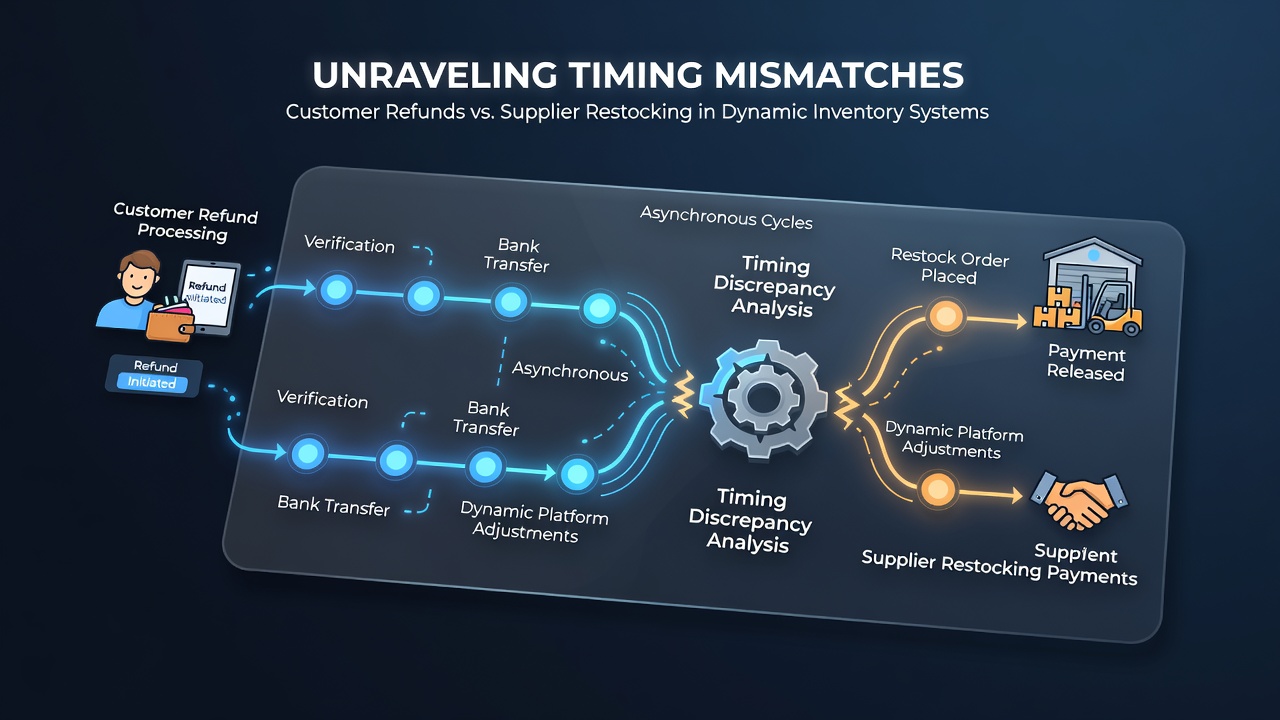
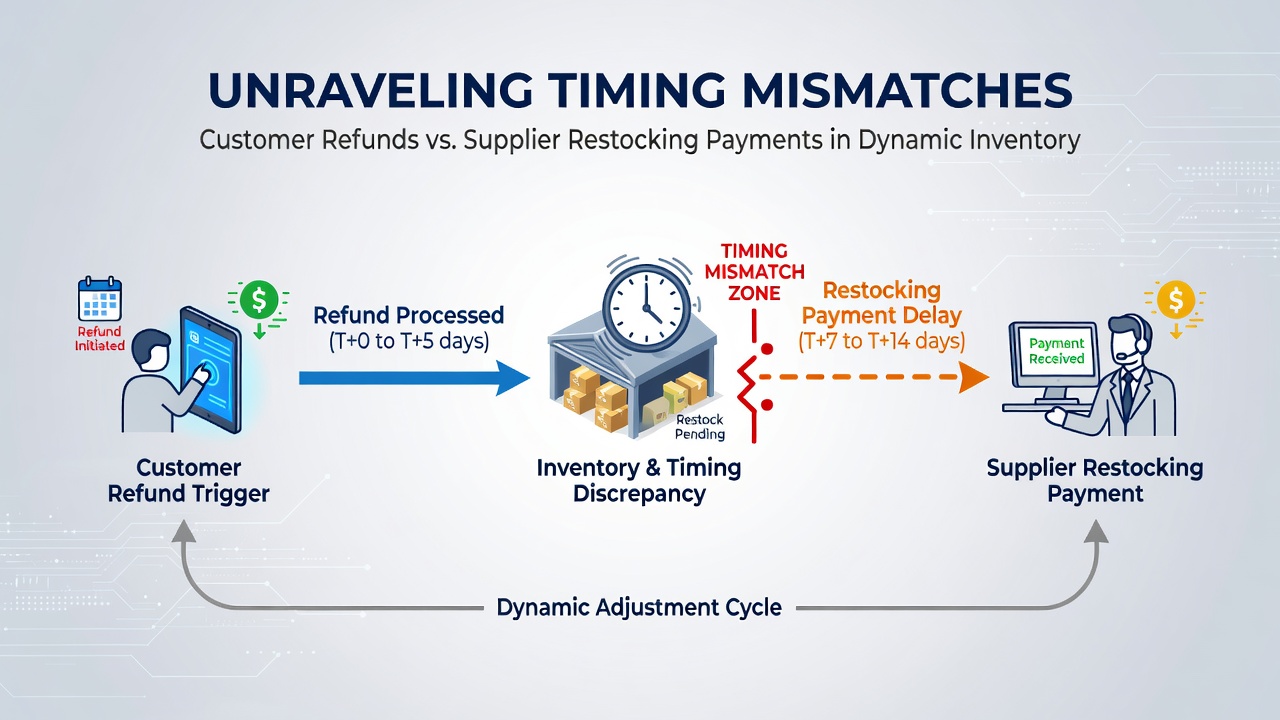
Dynamic inventory platforms handle rapid stock adjustments across multiple vendors while processing high volumes of customer transactions each day, yet the timing of refunds issued to buyers frequently diverges from the schedules used for restocking payments sent to suppliers. These mismatches arise because customer refunds often trigger immediately after return authorization, whereas supplier payments depend on verification steps, inventory counts, and contractual settlement windows that extend over days or weeks.
Core Mechanics of Refund and Restocking Flows
Customer refunds move through automated approval systems that confirm product condition and eligibility within hours of a return request, which allows platforms to issue credits or cash back before the returned item even reaches a warehouse. Supplier restocking payments, by contrast, follow batch reconciliation processes that require proof of shipment, quality inspection reports, and alignment with purchase order terms, and these steps create deliberate delays that protect against overpayment or defective goods. Observers note that the gap between these two cycles widens when return volumes spike during seasonal peaks or promotional events, because platforms must front the refund amounts while waiting for supplier invoices to clear.
Research from the European Central Bank shows that cross-border e-commerce platforms operating in the EU recorded average refund settlement times of 1.8 days in 2025, whereas supplier restocking disbursements averaged 11.4 days due to multi-currency verification requirements. Data released in August 2026 by the same institution indicated a further widening of this gap in platforms handling perishable or high-turnover goods, where restocking cycles stretched to 14 days amid increased regulatory checks on supply chain documentation.
Factors Driving the Timing Divergence
Several operational layers contribute to the mismatch. Automated refund engines prioritize customer retention metrics and regulatory mandates for prompt resolution, which forces platforms to release funds before returned inventory is reshelved or resold. Supplier payment systems, however, incorporate fraud screening, credit limit adjustments, and ledger updates that run on fixed settlement calendars, often weekly or bi-weekly. When a platform experiences simultaneous high return rates and delayed supplier deliveries, cash reserves become strained because outgoing refunds exceed incoming supplier credits within the same accounting period.
Take one mid-sized marketplace that connects apparel vendors with global buyers: during a major clearance event its refund queue reached 23 percent of daily transaction volume while supplier restocking payments remained locked in a 10-day approval queue, which forced the platform to draw on short-term credit lines to bridge the shortfall. Figures from the Reserve Bank of Australia reveal similar patterns among Australian-based platforms, where 62 percent of surveyed operators reported liquidity pressure tied directly to refund-restoking misalignment in the twelve months ending June 2026.
Platform-Level Responses and Reconciliation Tools
Platform operators address these timing issues through layered reconciliation protocols that match returned inventory receipts against pending supplier orders in near real time. Some systems apply dynamic netting rules that offset refund liabilities against future supplier credits, reducing the need for external funding. Others integrate with third-party financing providers that advance supplier payments at a discount while the platform collects and verifies return data.
According to a Federal Reserve study on payment system efficiency, platforms using automated netting reduced average cash buffer requirements by 31 percent compared with those relying on sequential processing. The same report notes that platforms serving vendors across multiple time zones benefit most from these tools because they can align settlement windows with regional banking hours rather than a single global calendar.
Regulatory and Reporting Implications
Financial reporting standards require platforms to disclose contingent liabilities arising from pending refunds and supplier obligations, which makes timing mismatches visible to auditors and investors. When refund outflows consistently precede supplier inflows, balance sheets show elevated working-capital needs that affect credit ratings and insurance costs. Regulators in several jurisdictions now request periodic data on these cycles to assess systemic liquidity risks in digital commerce.
Platforms that fail to synchronize the two flows face higher compliance costs because they must maintain separate audit trails for customer transactions and supplier contracts. The Monetary Authority of Singapore published guidance in early 2026 urging operators to adopt unified timestamping standards so that refund authorizations and supplier payment triggers appear in the same ledger view, thereby simplifying oversight.
Conclusion
Timing mismatches between customer refunds and supplier restocking payments remain an inherent feature of dynamic inventory platforms because the operational requirements for each process differ in speed, verification depth, and contractual structure. Data from multiple central banks and industry studies confirm that these gaps create measurable liquidity pressures, yet reconciliation technologies and regulatory frameworks continue to evolve in response. Platforms that align their internal clocks through netting protocols and unified reporting reduce exposure while meeting both customer expectations and supplier obligations. As transaction volumes grow and cross-border activity expands, the ability to manage these timing differences determines operational stability across the sector.